Commissioner Reynolds Makes the Case for Investments in Teacher Raises, Summer Learning Camps, and Education Freedom Scholarships

Commissioner Lizzette Reynolds (Photo by TDOE)
Tennessee Education Commissioner Lizzette Reynolds told lawmakers in the House Finance, Ways, and Means Committee on Tuesday that the billions of new dollars the state has invested in education since 2020 have made a difference.
Reynolds pointed out that Tennessee now ranks in the top 25 states for reading and math proficiency and is seeing important gains on state testing. Her comments come as lawmakers work on passing Governor Bill Lee’s $57.9 billion budget.
“Our goal has always been simple, to leave Tennessee’s education system better than how we found it,” said Reynolds. “This progress did not happen by accident. It reflects a sustained focus on strong academics, meaningful educator support, and a clearer definition of what student readiness looks like as we prepare our young people for the pathways ahead of them.”
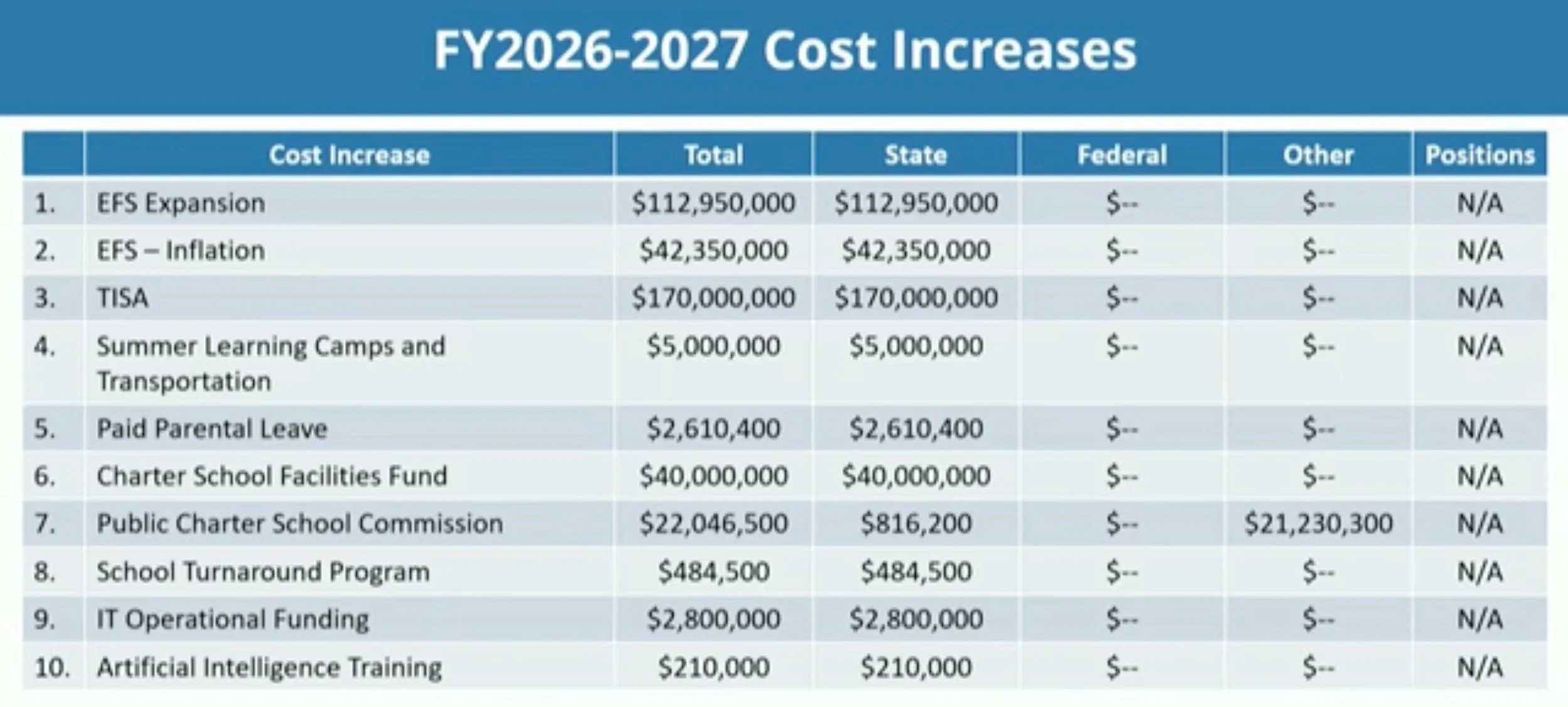
Reynolds said the Governor’s proposed $339 million in new K-12 spending for the upcoming year reflects those same priorities.
Graphic by TD
The request includes a $170 million investment in the state’s public school funding system, which will help raise all teacher salaries to at least $50,000 next school year.
The governor is also proposing $155 million to double the number of students receiving the Education Freedom Scholarship to 40,000. That funding, frequently referred to as vouchers, allows families to use tax dollars for private school expenses.
Reynolds received multiple questions from lawmakers about the expansion, including Representative Ryan Williams, R-Cookeville, who asked whether the department has studied the availability of private schools to take on the extra students who are using the money to leave public schools.
“As we look at providing these scholarships, if in Putnam County there’s no room at the inn, we shouldn’t be issuing new scholarships to people who can’t utilize those scholarships in those communities, and so being able to know what that is, is really important before we grow,” said Williams.
Reynolds responded that her department hasn’t researched private school vacancies, but it isn’t aware of any student who received a scholarship and was turned away because a private school lacked available space.
Summer Learning Camp Flexibility
Reynolds also received questions about the department’s request for an additional $5 million to support summer learning camps, in addition to the more than $70 million the state is already spending on the camps.
Those camps were initially designed to address COVID learning loss, but Governor Lee has continued to invest in them.
Committee Chair Representative Gary Hicks, R-Rogersville, pressed Reynolds about the need for continued investment, noting that the number of K-9 grade students participating has dropped from 102,000 to 89,000.
“If that’s the case, why are we asking for $5 million recurring for the summer learning camps and transportation?” Rep. Gary Hicks, R-Rogersville
Reynolds responded that the extra funding is needed to provide greater flexibility to school districts, which will use the dollars to better target specific kids who need remediation and tutoring.
“They need multiple strategies to ensure that they can successfully remediate and accelerate their students,” said Reynolds. “These dollars will create more flexibility.
Charter Facilities Funding Increase
The governor’s budget also includes additional investments in public charter school facilities. Many charter schools struggle to secure adequate facilities, in part because they don’t receive the same local dollars as traditional public schools. Last month, the high-performing STRIVE Collegiate Academy announced its closure, in part due to challenges in acquiring a new location.
The House, Finance, Ways, and Means Committee will wrap up its budget hearings tomorrow.