

Expansion of Education Freedom Scholarships One Step Closer
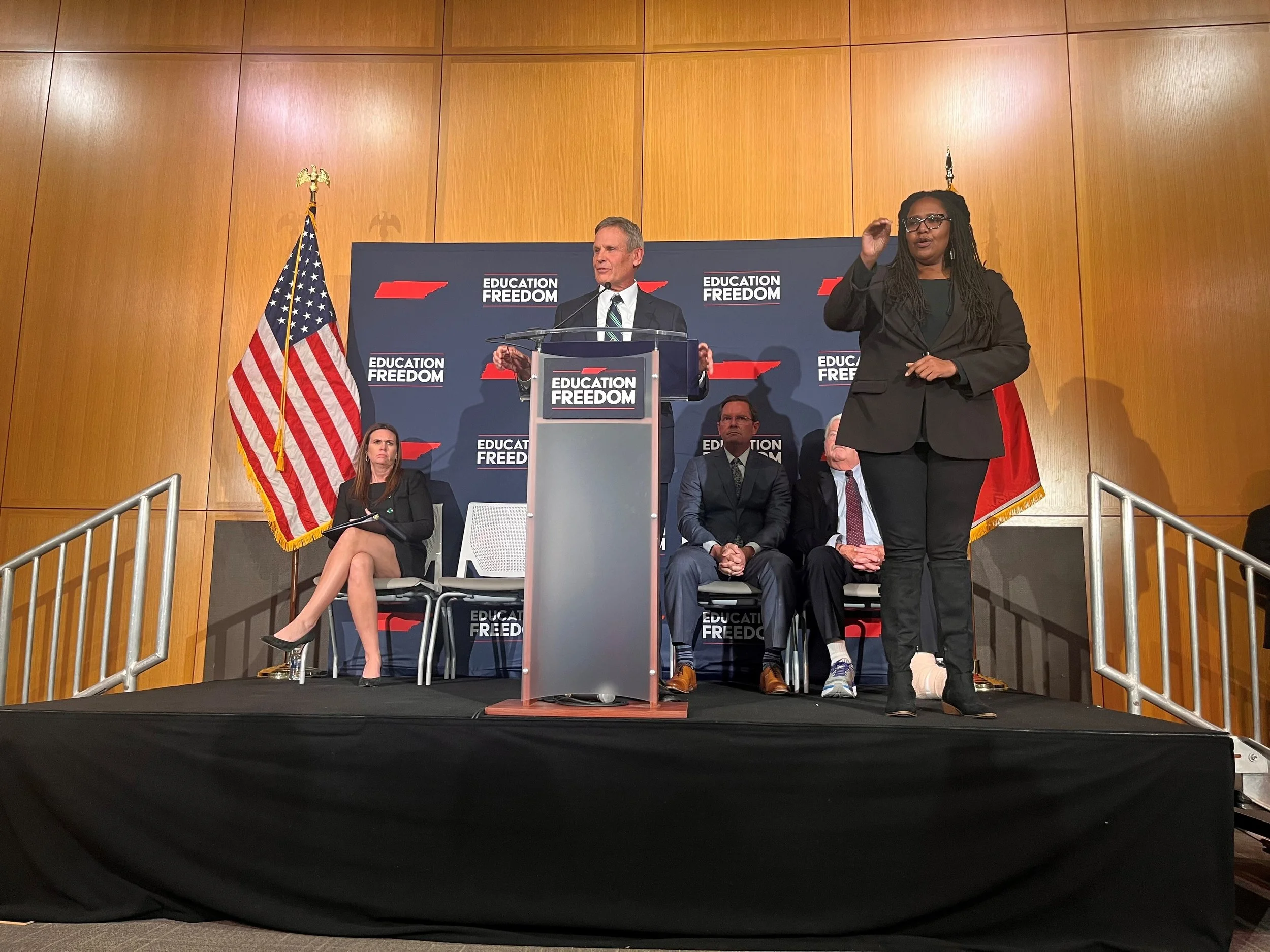
Governor Lee announces Education Freedom Scholarship program in 2024 (Photo by Sky Arnold)
A bill that would nearly double the maximum number of Education Freedom Scholarships awarded to students is now one step closer to becoming law.
The Senate Education Committee advanced Senate Bill 2247 with a 7-2 vote in its meeting on Wednesday. Senators Raumesh Akbari, D-Memphis, and Joey Hensley, R-Hohenwald, were the two dissenting votes.
Lawmakers passed the scholarship program last year to allow up to 20,000 students the ability to use taxpayer dollars for private school expenses. Governor Bill Lee lobbied for an increase in scholarships during his State of the State Address last month, saying the state received more applications than there were scholarships available for two consecutive years.
If passed by lawmakers, the legislation will increase the maximum number of scholarships to 40,000 in the 2026-2027 school year. Even if it fails, the Education Freedom Scholarship could expand by 5,000 additional scholarships next school year, and potentially in future years, under the program’s existing parameters.
The Fiscal Impact
According to the bill’s fiscal summary, the program’s expansion would cost more than $150 million for the 2026-2027 school year, more than $155 million for the 2027-2028 school year, and gradually increase each year afterward, with the money being taken from the general fund.
Bill sponsor Senator Jack Johnson, R-Franklin, cited demand as one of the main reasons for the proposed expense.
“We created 20,000 scholarships in the first 24 hours that the application process was open,” Johnson said. “We had 38,000 applications. So far for the coming school year, the (2026-2027) school year, we've had 56,000 applications.”
A Surprising Detractor
While Democratic lawmakers have consistently opposed what some refer to as a “voucher program,” the legislation found an unlikely opponent in Hensley, who voted in favor of the program last year, both on the Senate floor and in multiple committees.
Hensley said he’s voting no on the expansion because of concerns with its price tag.
"I voted for the vouchers before, and I'm certainly for choice, and I'm for increasing it (by) 5,000, but until we can get better funding, I don't think I can support the 40,000," Hensley said.
The bill now heads to the Senate Finance, Ways, and Means Committee on March 17.
The House version faces a vote next week in the House Education Committee.
