
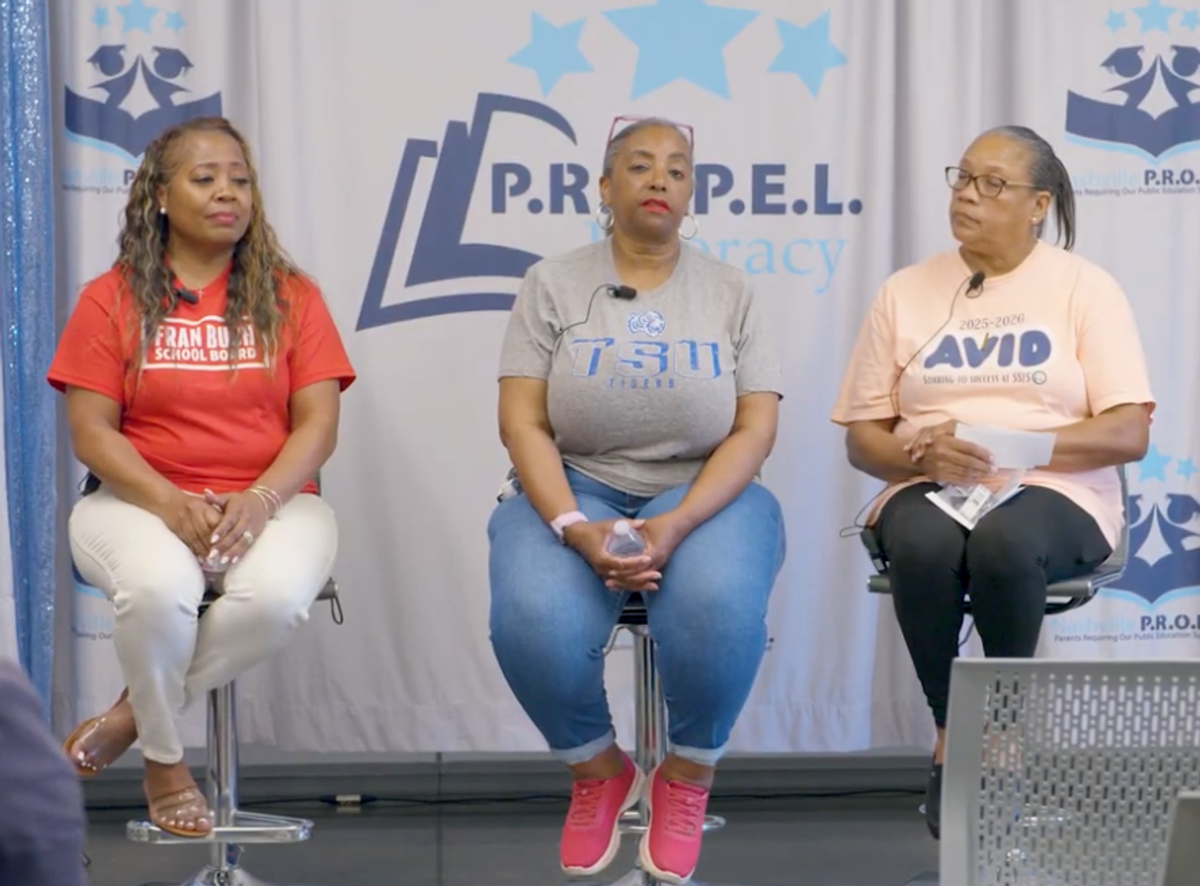

Metro Nashville Public School (MNPS) District 6 candidates were given the opportunity to answer questions from a moderator and the public Saturday night.
Incumbent Cheryl Mayes and two challengers, Fran Bush and Mary Polk, participated in a candidate forum hosted by Nashville PROPEL, an organization advocating for choice, access, and quality of education for children in the area.
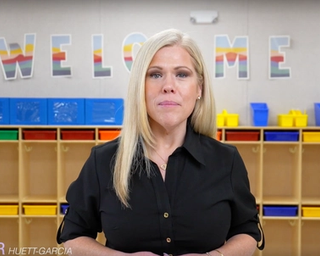
WSMV4 Nashville Multimedia Journalist Joylyn Bukovac moderated the event.
“Today's forum is an opportunity for families and community members to hear directly from our candidates right here about their vision, priorities, and commitment to improving outcomes for students in Metro Nashville Public Schools,” Bukovac said.
Candidate Introductions
The event began with each candidate introducing themselves and their qualifications. Fran Bush, a former MNPS student with bachelor’s and master’s degrees from Tennessee State University, went first. Most notably, Bush served on the school board from 2018 to 2022, before being unseated by the incumbent, Cheryl Mayes.
Mayes spoke next, highlighting her native Nashvillian status and degrees from Tennessee State University and Lipscomb University. She also noted that she serves as the legislative liaison for MNPS, which allows her to advocate “up on the Hill” for the school board and her district.
Mary Polk spoke last, citing her experience as a retired school bus driver and employee of the MNPS Transportation dispatch office. She is also a 16-year veteran in the payroll office of the Vanderbilt University Medical Center. She is currently an associate minister at Corinthian Missionary Baptist Church.
Parental Engagement and Public Transparency
One of the most discussed topics in the forum was parental engagement. Bush said she felt like a lack of parental input was one of the reasons she decided to run for school board.
“Respectfully, when we look at our current school board members, one of the things that has happened throughout these past four years is that parent engagement hasn't been there,” Bush said. “Parents (don't) feel like they're connected to MNPS, and that's the reason why we have 5,000 (fewer) students that attend MNPS. They're choosing our charter schools. They're choosing the new voucher program, and they're not connected.”
Mayes, the incumbent, offered a rebuttal, claiming parental engagement is not a driving force in students leaving MNPS and that, if anything, immigration crackdowns have caused more damage.
“I have receipts about parent engagement, especially in this community, so I know that I am engaging with parents, and respectfully, parent engagement is not the reason that we are losing children,” Mayes said. “We have a very high immigration population right here in southeast Nashville, and we've got parents that are afraid to take their children to school.”
Mary Polk added to Bush’s sentiments.
“We do have students and parents that are not being reached, and I know they're not, because they're coming to me and they've been coming to me on my bus for many years now about what needs to go on in the school (and) what needs to go on on the bus, and I feel like we need to stop being a rubber stamp,” Polk said. “We're not a rubber stamp as a board. As a board, you’re supposed to make policy (and) make policy work.”
Literacy
The candidates were questioned about the state’s turnaround framework, which requires interventions and even leadership changes when targeted schools do not improve their literacy rates. Each of them were asked to define what success for a corrective action plan would look like and who should be held accountable.
“If our leaders are not being supportive and providing that leadership that encourages our teachers, our educators to teach our children in a more successful manner, then we have to think about, who are these leaders and what do we need to do,” Mayes said. “At the same time, it is not up to just the educators to make sure that our children are successful. As I said, I'm an advocate for my children, and I made sure that I understood that the teachers understood that it was definitely not just (their responsibility) to educate our children, but it was also my responsibility as a parent to make sure that I knew what was happening in those schools.”
“The teachers can only do what (they are) allowed to do and how they teach,” Bush said. “When policies and procedures are put in place for our teachers, that's what they have to follow. Sometimes teachers can't go outside the box, because it's all about the testing. It's all about trying to make sure that these numbers are accurate. Accountability means a lot, and it's not our children's fault. It is the responsibility of the board to make sure that the system is working for our children.”
“We're not there for picture taking,” Polk said. “We're there for getting stuff done. Policy means that we put it in place, and then we need to make sure it follows through. If we don't follow through with it, there's no reason to make policy. So again, if we need to start with the director and say, ‘You know what, let's have a sit down (and) let's have a talk about what we need to do to get this improved,’ let's start there, and let's work our way down.”
Voters will decide the District 6 race during the August 5 County Primary. The winner will serve a four-year term.