

Sports Wagering Council Raises Alarm on Lottery Scholarships Revenue
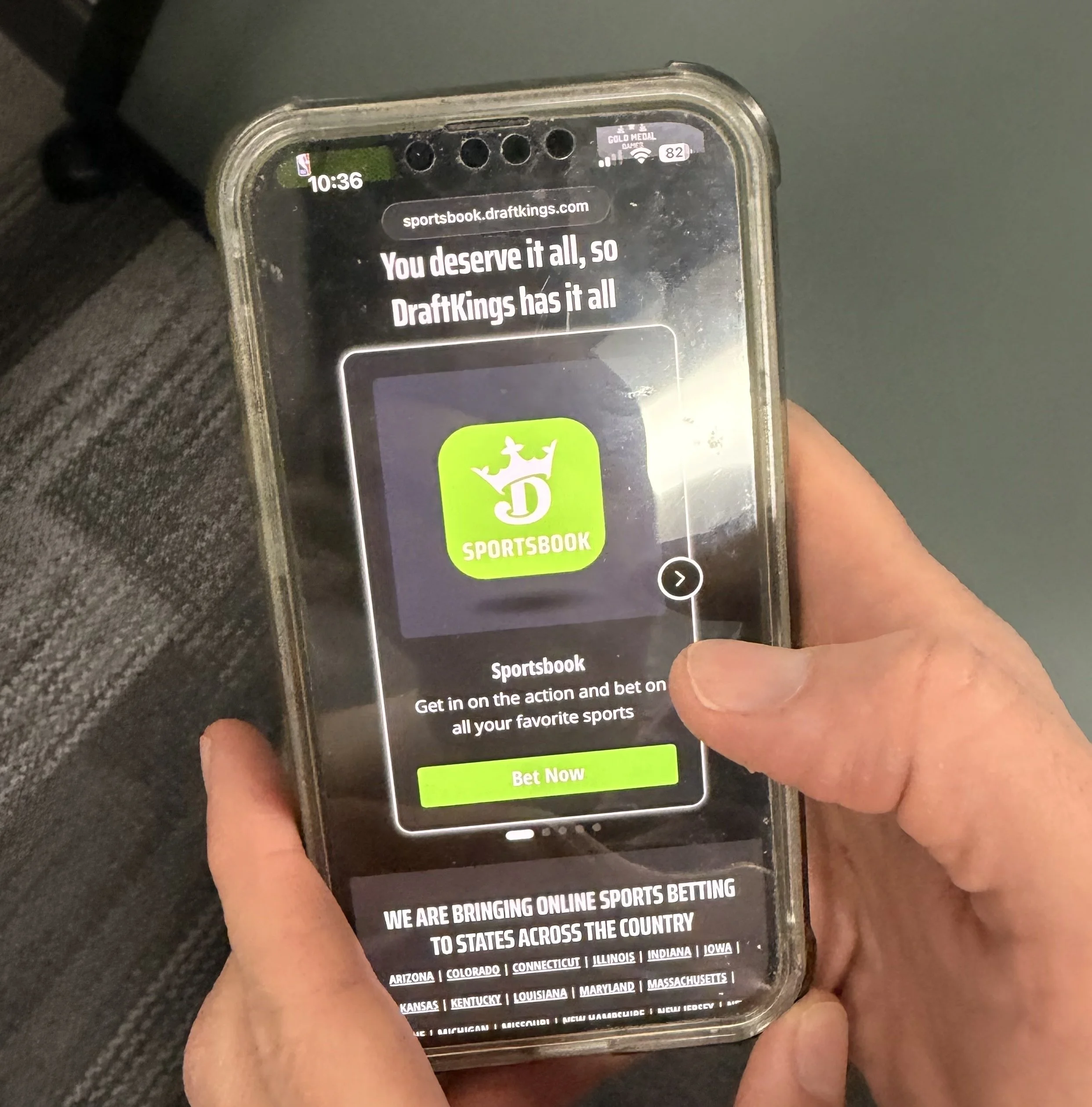
The DraftKings Sportsbook iPhone app. (Photo by Tennessee Firefly)
In Tuesday’s Senate Finance, Ways, and Means Committee meeting, the Sports Wagering Advisory Council (SWC) sounded the bell on what it believes to be alarming news about betting revenue.
The SWC is responsible for the regulatory functions governing sports betting in the state, a $6 billion industry. It also collects “privilege taxes” from sports betting operators, totaling $412 million since legalization.
SWC Executive Director Mary Beth Thomas told lawmakers that last December saw the first dip in sports betting volume since legalization in Tennessee, coinciding with the growth of advertising for “prediction markets.”
What is a Prediction Market?
Prediction markets, such as Kalshi, are speculative, exchange-based markets that enable the prediction of specific outcomes, such as the price of corn over time.
“They claim to be governed by CFTC (Commodity Futures Trading Commission) rules and that they can offer sports bets (while) claiming that they’re basically futures contracts,” Thomas said in the meeting. “…If a farmer wants to hedge on the price of corn, they could buy a contract to buy or sell it at a certain price at a later date.”
As of now, prediction markets are not taxed by the state.
Impact on Scholarships
If large numbers of wagering vendors move away from traditional sports betting, Thomas said it would result in a significant decrease in tax revenue. That would, in turn, impact funding Tennessee depends on for the lottery account, including both HOPE and Tennessee Promise scholarships.
The HOPE Scholarship is awarded to entering freshmen who enroll at an eligible postsecondary institution within 16 months of graduation from an eligible high school in Tennessee. The Tennessee Promise is a scholarship and mentoring program providing students a “last-dollar” scholarship that covers the cost of tuition and mandatory fees not covered by the HOPE scholarship, the Pell grant, or the Tennessee Student Assistance Award.
In the 2023-2024 year, more than 71,000 students received over $334 million in state aid through the HOPE scholarship and its supplements, and more than 67,000 high school seniors applied for Tennessee Promise ahead of the November 2025 deadline, according to the Tennessee Higher Education Commission (THEC). As of spring 2023, the THEC announced that Tennessee Promise alone has served more than 126,000 students with more than 49,400 earning a postsecondary credential since its inception in 2015.
SWC Action
The SWC estimates that a switch to prediction markets could significantly affect annual wagering volume, with Kalshi alone recording $1 billion in trades in just one week, mostly on sports bets. It has served cease-and-desist letters to 14 sportsbooks last year and to 14 more year-to-date, arguing that their operations violate state gaming laws.
The SWC is currently in litigation with Kalshi in the United States District Court for the Middle District of Tennessee.
Thomas expressed the group’s concern that the state’s sports betting program could be further eroded if litigation does not go in its favor.
