


A controversial bill that would require school districts to collect data on immigrant students’ documentation status is one step closer to becoming law.
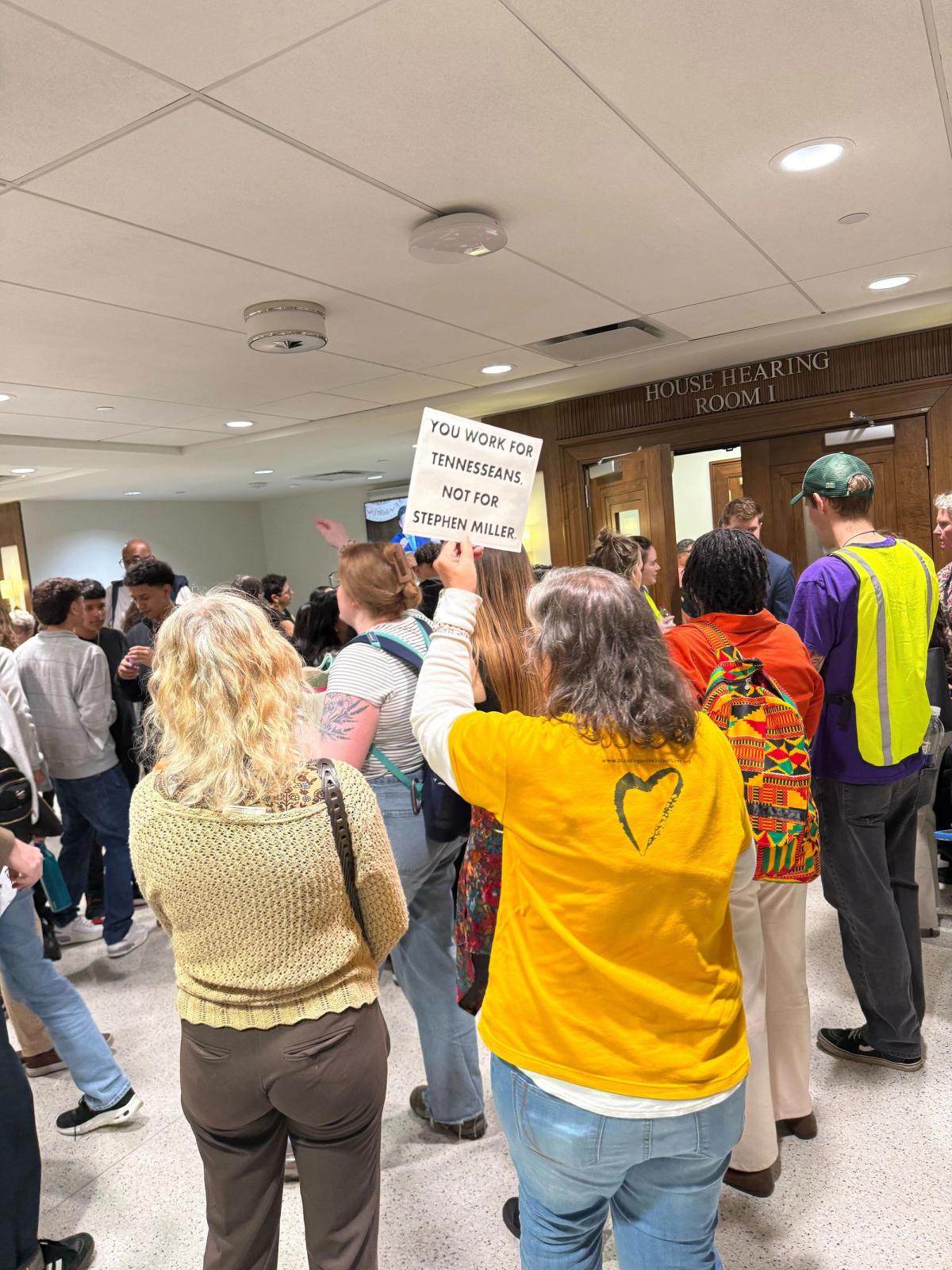
Tennessee House members passed House Bill 0793, sponsored by Representative William Lamberth, R-Portland, on Monday despite consistent, vocal Democratic opposition, questions about its fiscal impact, and the presence of more protesters at the meeting. The bill requires schools to collect data on immigrant students and then hand that data over to the Tennessee Department of Education, immigration officials, and state lawmakers.
"There are 340 million people in this country. Mathematically, it is impossible to literally care for 8.3 billion (people). It is just not possible, so we must have good borders. We must know how many illegal immigrants are in the schools, so that we can properly apply the funds we have to provide for an education for those children that have legally come here," said Lamberth.
Opposition from Democrats
A gaggle of Democratic lawmakers spoke out against the bill before its eventual passage, including Representative Justin Jones, D-Nashville, who introduced an amendment to rename the bill “The Doxxing Immigrant Students Act.”
Though the amendment failed, Jones made a point to express his feelings that the bill is “unconstitutional,” “racist,” and “vile.”
“It's sickening that we're even debating this today,” Jones said. “And I hope that we see what is happening is we're going to be doxing students (who) are going to be scared to come to school. For many students, school is the only place they can get access to free lunch. School is the place where they can find their imagination and be their whole selves. But we're making our teachers become ICE agents, and it's shameful”
Challenge to Plyler V. Doe
Representative Gabby Salinas, D-Memphis, said she believes the purpose of the bill was to challenge the Supreme Court ruling Plyler v. Doe (1982), which ruled that states cannot refuse public education to the children of undocumented immigrants.
“I say to my fellow representatives that represent many districts in Tennessee, our kids here in Tennessee are not your legal experiment,” Salinas said. “The United Nations said that a right of every child is (an education) regardless of what country they live in, and that has been adopted by almost every single country in the world, in the world.”
Representative Gino Bulso, R-Brentwood, directly addressed Salinas’s statement, arguing that the Plyler v. Doe ruling unjustly took power out of the states’ hands.
“What this bill is about is giving us data and returning to our state the ability to decide the education policy of this state,” Bulso said. “If this bill leads to a challenge to (Plyler v. Doe), that's a reason to vote for it, not a reason to vote against it. That decision was not grounded in the Equal Protection Clause, in the 14th Amendment, or in any other part of our U.S. Constitution.”
Senate Version More Expansive
The House version of the legislation differs significantly from the version the Senate passed last year. Lawmakers backing the measure will need to negotiate a unified plan in a conference committee before it is enacted
The Senate’s version would allow school districts the ability to deny students without legal documented status or charge them tuition. That version stalled in the House last year admit concerns it might cost the state federal education dollars.
A date has not been publicly assigned for a conference committee to resolve the two chambers differing bills.