House Democrats Break with Senate Counterparts to Block Public School Choice
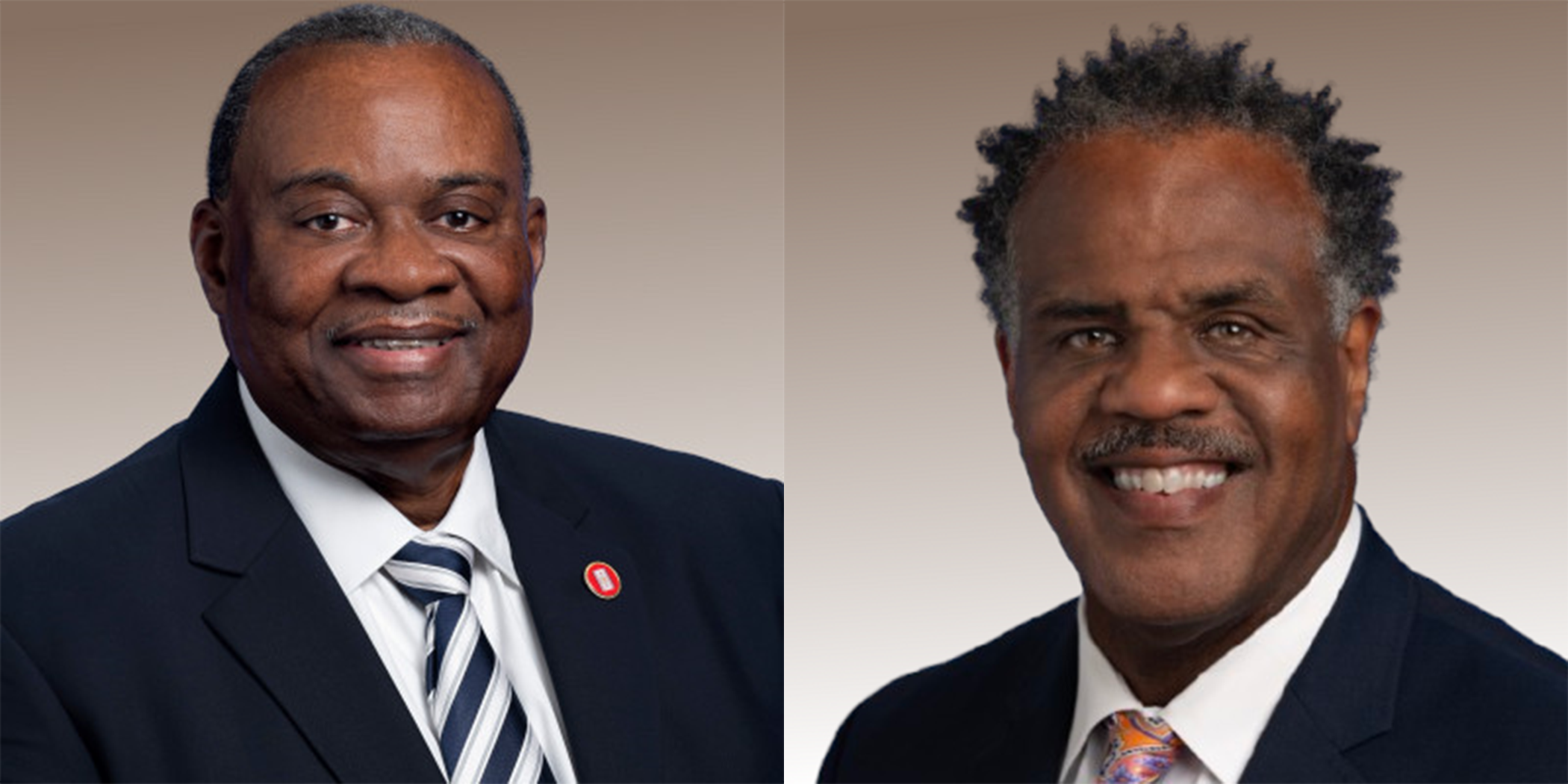
Representatives Yusuf Hakeem and Sam McKenzie (Photo by Tennessee General Assembly)
State Representative Yusuf Hakeem, D-Chattanooga, used Tuesday morning’s House K-12 Subcommittee meeting to make the case against giving parents the “free will” to choose what public school their child attends.
Hakeem and Representative Sam McKenzie, D-Knoxville, broke with Senate Democrats to kill a bill that would have reduced barriers for parents seeking to enroll their children in schools outside of their zoned districts, a practice frequently called open enrollment. Hakeem told subcommittee members that giving parents of high-performing students the “free will” to move might be bad for lower-performing students.
“I really question if we’re looking at the whole system or the whole school, and just looking at this concept of free will,” said Hakeem. “If you have within a school, people who have been looked on as being less, being looked on as being not as capable, you don’t have a balance, you don’t have someone, other students, that’s sort of an inspiration to those to improve themselves, but we see that as free will and I think you (are) harming the students.”
The Senate unanimously passed its version of the bill last week with the support of five Democrats.
The Case for Open Enrollment
A recent poll found open enrollment policies are wildly popular for Democrats and Republicans alike in Tennessee, with more than 82 percent of voters favoring them. Those numbers are even higher in Representative Hakeem’s hometown of Chattanooga, where more than 85 percent support open enrollment.
Under current law, school districts can allow students who live outside district boundaries to enroll, but supporters say the process isn’t particularly convenient or consistently fair for families. School districts are only required to conduct an open enrollment period of 30 days, and there aren't always clearly defined rules for when a district can deny enrollment to nonresident students.
Bill sponsor, Representative William Slater, R-Gallatin, said his legislation would address that and provide a fairer opportunity for parents when the best school for their children is in a different zip code.
“I think that there’s great benefit when we consider what a family’s choice may be. What school would be the best fit for their children,” said Slater. “This bill is about choosing one public school other than the one for which a student is currently zoned.”
Subcommittee Split
Tuesday’s 4-4 vote split Republicans on the subcommittee.
Representatives Kirk Haston, R-Lobelville, and Rep. Mark White, R-Memphis, sided with Democrats to keep barriers in place for open enrollment, despite both Republicans previously proclaiming their support for school choice and voting for the Education Freedom Scholarship program last year, frequently referred to as private school choice.
Opponents questioned the open enrollment legislation’s potential impact on the finances of school districts accepting nonresident students, including Hakeem, who repeatedly asked whether this bill would cost Knox County schools money, despite representing Chattanooga.
State attorneys confirmed that wouldn’t be the case under the bill, as state dollars would follow the nonresident student to their new school district. Local dollars would not follow those students, but the legislation would have allowed school districts to charge tuition to make up the difference.
Republican Support
The remaining four Republicans on the subcommittee voted for the bill, including Slater and Representatives Gino Bulso, R-Brentwood, Lee Reeves, R-Franklin, and Aron Maberry, R-Clarksville.
All four have traditionally supported giving parents more choices for where their children attend school, including both Bulso and Reeves, who represent Williamson County Schools, one of the highest-performing and wealthiest school districts in the state.
Mayberry says open enrollment is common in his district in Montgomery County and often benefits less-affluent neighborhoods as well.
“A lot of our more economically disadvantaged schools actually have more enrollment,” said Maberry. “We end up having a lot of students move to those areas because the programs that are happening in those schools may not be happening in other schools.”
This week, the president of the education advocacy organization 50Can also made the case for open enrollment’s impact on economically disadvantaged neighborhoods by arguing in an op-ed that efforts opposing public schools’ access to all students regardless of zone "has its roots in 'redlining'—the outlawed practice of keeping disfavored racial groups out of certain neighborhoods."