
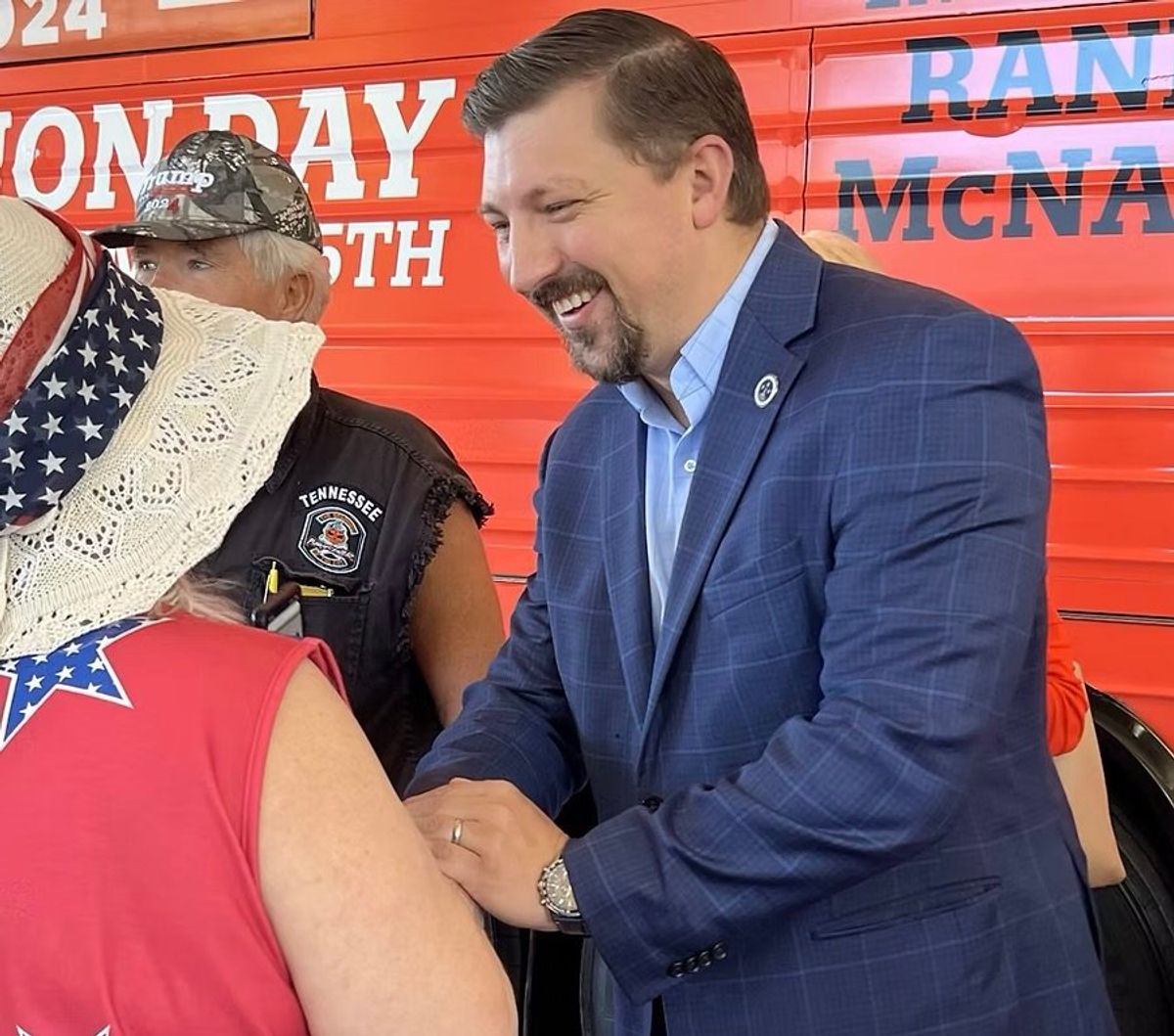

State Senator Adam Lowe, R-Calhoun, used an example from his East Tennessee district to make the case for legislation to remove barriers to open enrollment.
In Wednesday’s Senate Education Committee meeting, Lowe pointed out that schools in his part of the state have allowed students who live outside the zoned school district to enroll. He says it hasn’t created problems with overcrowding.
“They’ve never returned a student to (their prior) zone,” said Lowe “They managed these capacities well. They’re relatively predictable. They even tend to predict within targets on kindergartners coming in too which is really the threshold where you’ve got to guess the most.”
Current state law allows children to enroll in schools outside their district, but the process isn’t particularly convenient or always fair for families. Under the law, school districts are only required to conduct an open enrollment period of 30 days, and there aren't always clearly defined rules for when a district can deny enrollment to nonresident students.
Reducing Barriers for Open Enrollment
Lowe is co-sponsoring Senate Bill 0328 with Senate Education Committee Chair Dawn White, R-Murfreesboro, to reduce some of those barriers. The legislation expands the opportunity for open enrollment statewide and guarantees the enrollment period for nonresident students will be at least 45 days long.
It also creates an appeal option for students who are denied, something that’s not currently available.
In an interview with the Tennessee Firefly’s On the Fly podcast, Lowe said the changes are needed, in part because many families are finding it financially challenging to live within the school district attendance zone where they want their child to go to school.
“Public school choice, i.e. open enrollment, really gives families the breadth they need to consider where the best fit for their kid is,” said Lowe. “I mean that’s the undergirding notion of school choice period, right? That there’s a free market of educational ideas. Different schools have different brands; different ways they approach things and finding where your child fits the best. We want to create as few obstacles to that as possible.”
Protecting Public School Districts
If approved by lawmakers, Lowe’s legislation contains a few provisions to ensure these nonresident students don’t create a burden for their new districts.
The bill would not require school districts to accept nonresident students if they lack the adequate space for them and they wouldn’t be required to hire additional staff to accommodate open enrollment. Districts would additionally be able to continue charging tuition to nonresident students.
Lowe says his bill also provides an important financial advantage to school districts that current open enrollment policies lack. Under existing rules, districts sometimes receive less funding from the state for nonresident students because those students don’t qualify for “weighted funding.”
Those “weighted” dollars support students with unique learning needs, like English as a second language learners (ESL) or students with disabilities, but districts only receive that funding for students who live within their attendance zone.
Lowe’s bill would change that.
“It’s absolutely a strength of this bill that now if you engage in open enrollment through this, the weights of the student follow as well,” said Lowe. “This is an amazing piece because it doesn’t make schools decide whether or not they have the excess resources that they may need for an ESL student or for a student who’s special needs or something like that. They know that funding from the state is going to follow to help contribute to providing services for that student.” 
What Happens Next
The Senate Education Committee advanced Lowe’s bill to the House floor unanimously last Wednesday.
The House version of the legislation, sponsored by Rep. William Slater, R-Gallatin, faces a key vote in the House K-12 Subcommittee on Tuesday.