
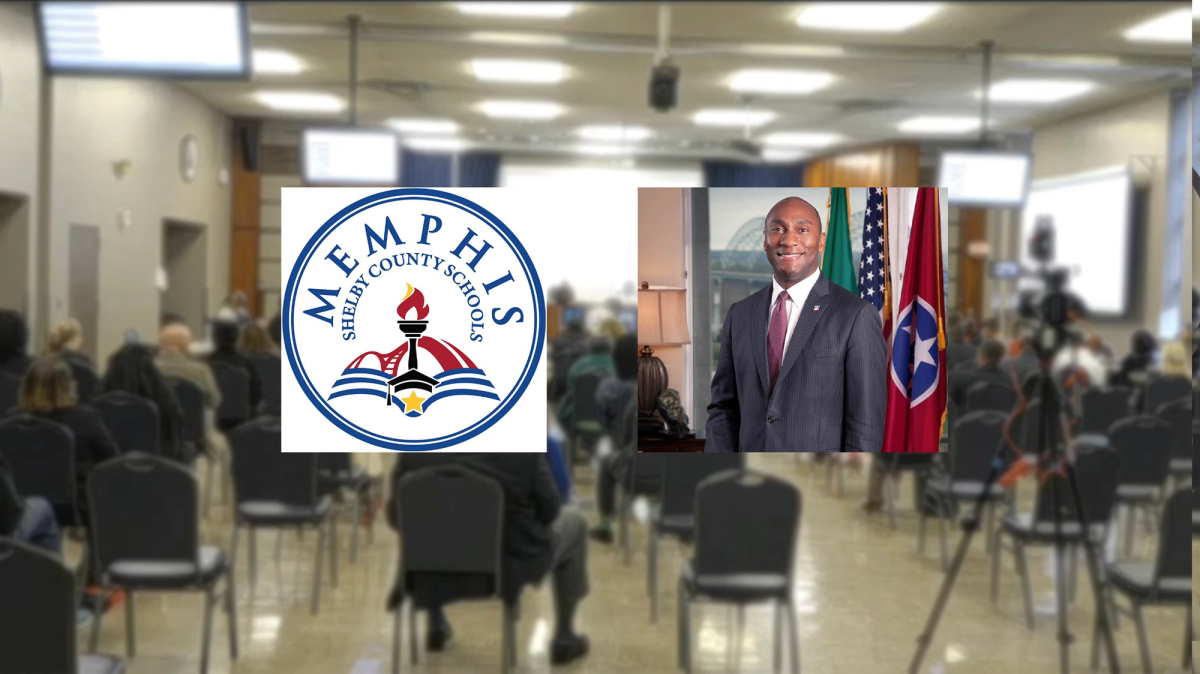

Shelby County Mayor Lee Harris made it abundantly clear this week that he’s opposing recently passed legislation that creates a state oversight board with far-reaching authority over Memphis-Shelby County Schools (MSCS).
Harris supported Monday’s failed attempt by the County Commission to approve funding to challenge the legislation and released a statement to Memphis media afterward, saying he plans to continue lobbying one commissioner to change her vote.
“This is not the end of the conversation,” the statement said. “Our school system employs thousands of teachers, pays good benefits, supports our local unions, and is working to bring new school construction projects to Memphis’ urban core. All of that would end with state officials in charge. State officials have repeatedly said Tennessee is an at-will state and that union contracts aren’t worth the paper they are written on. From here, we plan to work on getting Commissioner Britney Thornton to understand what’s at stake and to change her vote, which is critical to saving our schools.”
The oversight board will consist of nine members appointed by state leaders and will control budgeting, contracts, and charter school applications once signed by Governor Bill Lee.
Harris also made the case Wednesday that this board will end union agreements.
“What happens to our teachers when the State takes over Memphis-Shelby County Schools? A state-appointed board could refuse to recognize existing union agreements, strip teachers of negotiated salaries and healthcare benefits, and eliminate protections that govern class sizes, planning time, and daily working conditions. The stakes couldn’t be higher,” wrote Harris.
No Mention of Students
Notably, neither of Harris's statements mentioned the district’s 100,000 students or the years of performance concerns that contributed to support for state intervention.
Less than 19 percent of the district’s middle schoolers achieved proficiency on state testing in English language arts (ELA) last year, and fewer than 30 percent of elementary and high school students did. That’s well below the state average of 41 percent for all students.
Math proficiency was also below that of their peers, with less than 20 percent of MSCS middle and high school students achieving proficiency, and fewer than 27 percent of elementary students. The state average for all students is 39 percent.
Many of those students are attending schools that are failing to make the grade as well. One out of every three MSCS schools received a “D” or “F” on last year’s School Letter Grades, and last month, a State Board of Education committee recommended creating a corrective action plan for 14 of those schools.
Supporters Cite Student Performance
Both sponsors of the intervention legislation made a point of citing the need to improve student performance when making the case for their bill in a nearly hourlong interview with ABC24 Memphis on Wednesday.
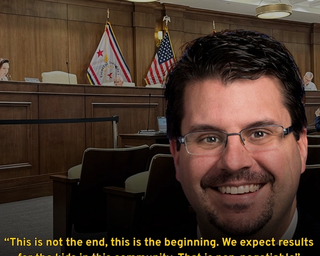
“75 percent of the students can’t read when they graduate. We have to fix that,” said Senator Brent Taylor, R-Memphis.
House sponsor Representative Mark White also pushed back on a frequent talking point for MSCS leaders who say the district is on the right track for improvement. Last year, Memphis-Shelby County Schools earned the state’s highest level for student growth for a fourth year in a row, but White pointed out that growth isn’t leading to actual proficiency goals.
“If you get a child that’s three and four years behind and you move them a little bit upwards to where they should be, that’s growth, but you’ve got to get to proficiency, and that’s where we have never gotten, to proficiency,” said White.
What Happens Next
White said Governor Lee could sign the legislation as early as next week. He also said Republican leaders have already begun compiling a list of potential candidates for the 9 seats on the oversight board.
All but one of those seats have to be filled by residents of Shelby County.