

Tennessee SCORE Pilot Study Validates High-Dosage Tutoring and Instructional Coherence
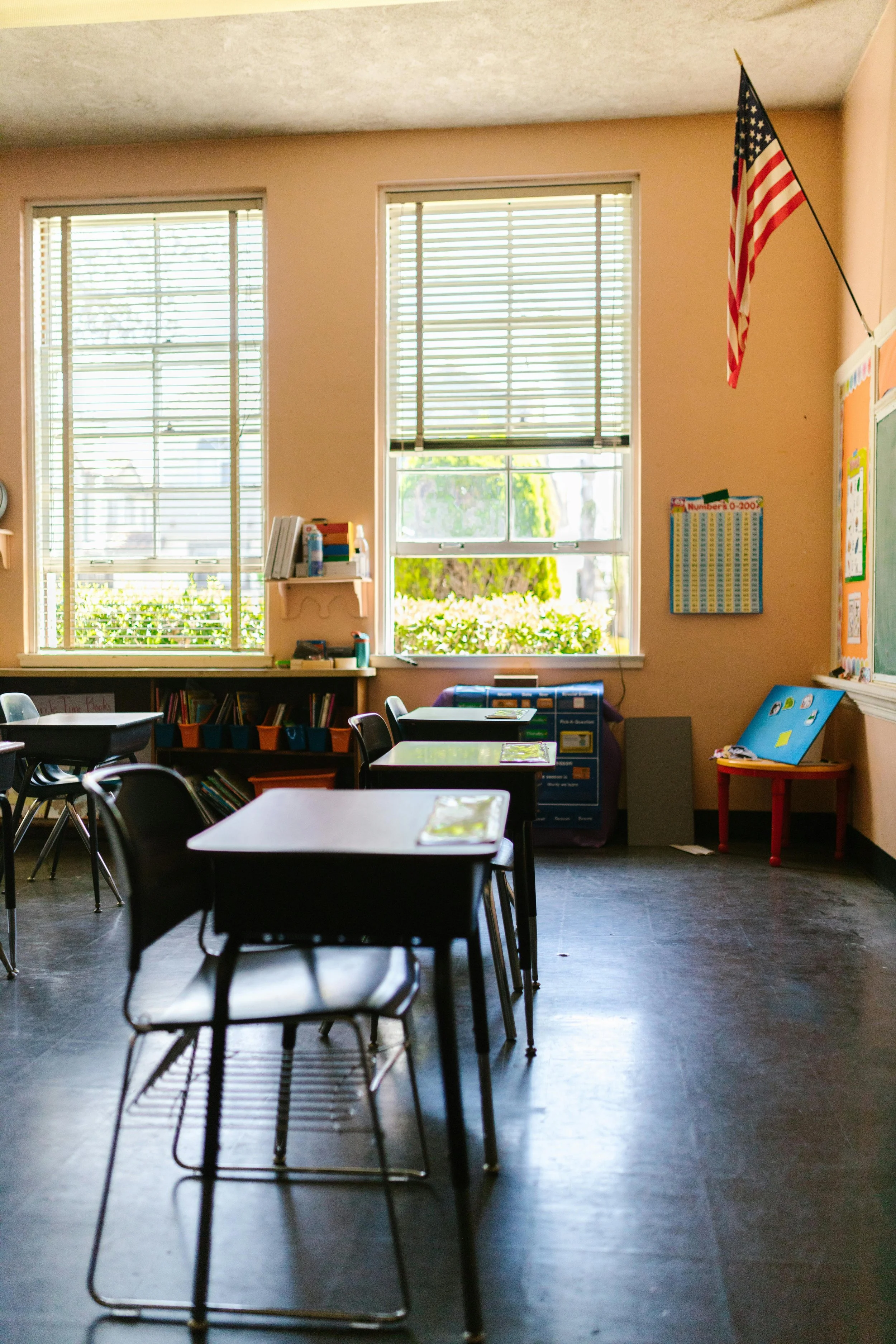
An image of an empty classroom (Pexels/RDNE Stock project)
The education organization Tennessee SCORE shared key findings on Friday about the impact that new “instructional coherence” intervention strategies had on students in Knox County Schools last year.
The presentation, titled “Making Instructional Coherence Work Through Evidence, Practice, and Scale,” included a panel discussion reflecting on shared lessons from the 2024-2025 pilot study of high-dosage tutoring and instructional coherence in the district. The panelists included SCORE Vice President of Research and Innovation Courtney Bell, Accelerate Managing Director of Programs Jennifer Bronson, Taiesha Young, principal of Carter Elementary School in Knoxville, and representatives from Knox County Schools.
Bell defined “instructional coherence” as “when schools align the academic content of their intervention periods to their core instructional needs.”
Instructional Coherence and Inherent Intervention
Tennessee, like many other states, has a tiered intervention system leveraging increasingly intensive support for students who are not meeting grade-level expectations. The process is usually led by the administration of an assessment called a “universal screener,” which is used to pinpoint which students are falling behind. The score a student receives on the screener determines which tier of support they will receive, on a scale of 1 to 3, with 3 indicating the most help.
“We send kids for hours of additional support each week, support that is using research-based strategies and approaches, but that is not reinforcing the learning they're doing in their regular classroom or addressing their specific grade level gaps,” Bell said.
Bell said that, in general, if students aren’t succeeding in a traditional classroom, the working hypothesis is usually that they need something different.
“At the first sign of weakness, we change the setting, the group, size, the instructor, the materials, the routines, the scope and sequences (and) the progressions,” Bell said. “But what we've seen is that something different often leaves students feeling confused, disoriented, and dejected, because it's so disconnected from their day-to-day.”
Instructional coherence, Bell said, operates under a different hypothesis: that if students aren't finding success in a traditional classroom setting, they might need more time with the same high-quality content, but in a smaller group. She purported that, in a smaller group, instructionally coherent intervention allows students to engage with the same scope and address specific skill deficits.
Key Findings
Bell highlighted some of the study’s biggest takeaways, including that coherent interventions:
· Led to 1.3 months of additional literacy growth, including “significant gains” for students in the bottom 10 percent and for boys overall.
· Reduced intervention needs by 37 percent at Pond Gap Elementary School.
· Saved an average of $530 per student and was effective with paraprofessionals.
The Panel Discussion
Jennifer Bronson emphasized the importance of coherent intervention and its appeal to parents, citing a new 50CAN poll of more than 20,000 parents across all 50 states. She said 86 percent of parents polled either somewhat agreed or strongly agreed that public funding should provide access to free tutoring in school, and that the results crossed party lines.
“It's so rare to find something that is good for kids, good for educators, and budgets,” Bronson said.
Taiesha Young said she gleaned from the study that educators needed to stop viewing intervention as anything other than an extension of tier-one instruction, and that it starts at the district level.
“I think that leadership matters,” Young said. “Principals and districts have to stay involved in intervention the same way that we're involved in tier one, and that means attending data meetings, that means sitting in PLCs (and) that means understanding the materials yourself.”
Young also said that committing to this style of teaching means taking the time to train teachers and paraprofessionals to treat intervention with the same importance as tier-one instruction.
“It just really brings clarity to the work that we're doing, that it's not easy, but we have to do something if we want to produce the growth that we want, and for students to be successful,” Young said.
