STATE EDUCATION NEWS
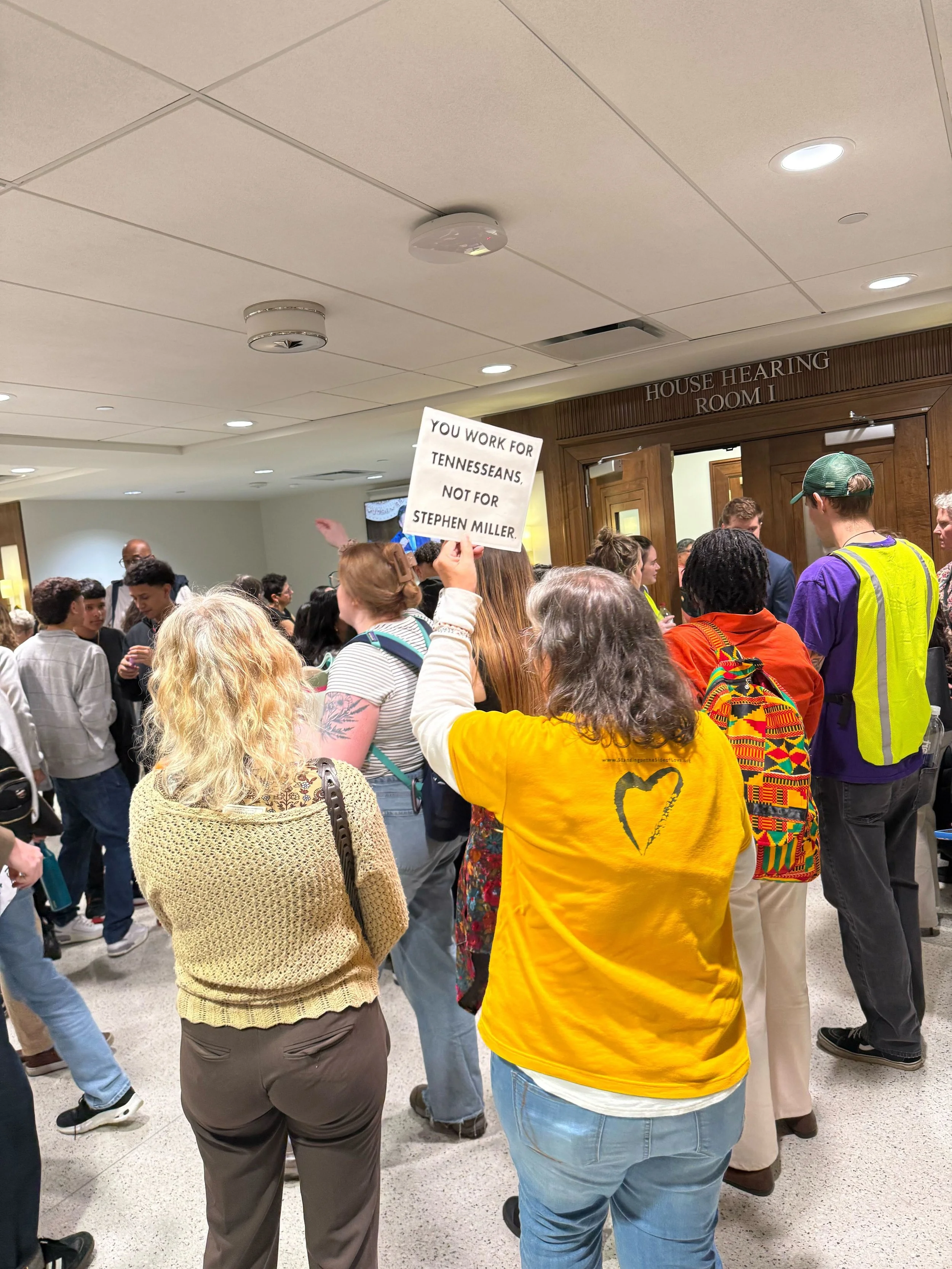
The proposed policy priority is in response to legislation state lawmakers considered earlier this year that would allow school districts the option of refusing to enroll undocumented children or charging them tuition.
Under the proposal House Speaker Cameron Sexton plans to unveil next year, K-6 grade teachers would only need two years of higher education and an internship.
Representative White said that too many parents across the state lack access to childcare, either because of a shortage of available slots or because of cost.
Tennessee State Board of Education Chair Robert Eby unveiled an updated proposal at Thursday’s board workshop that would reduce the World Language credits high school students need to graduate from two to one.
Sixteen of Memphis-Shelby County Schools’ 44 Reward schools are public charter schools, along with eight of Nashville’s 28 Reward schools.
Parents named in the suit argue the program violates the Education Clause of the Tennessee Constitution by diverting funds from public schools and preventing students the adequate education guaranteed by the state constitution.
The report found that Navigate Reconnect participants are 11 percentage points more likely to remain enrolled in college than similar students who aren’t participating in the program at the end of two years.
Through Lumina Foundation’s State Attainment Collaborative, state leaders will work alongside education, business, civic, nonprofit, and policy leaders from 12 states to define what makes an industry credential valuable, update Tennessee’s statewide educational attainment goals, and align policies and programs to better support students.
A new report from the Millennial Debt Foundation’s In the Black initiative argues that federal education funding “rests on shaky long-term economic foundations” due to rising spending on Medicare and Social Security and the growth of federal interest expenses.
Education Commissioner Lizzette Reynolds reported that roughly 90,000 students have been participating in the camps each summer, and 73 percent of those students attended at least 90 percent of the programming.
Blackburn held the support of 60 percent of the 484 Republican voters surveyed online in the poll, well ahead of Congressman John Rose’s 10 percent and State Representative Monte Fritts’ five percent.
Tennessee lawmakers pressed state education officials this week for answers on how the ongoing federal shutdown and potential Trump-backed block grant proposals could affect school staffing and services for disadvantaged students.
In an interview with the Tennessee Firefly, Sexton said he’ll propose creating an associate’s degree program for future kindergarten through sixth grade teachers.
At Thursday’s Advisory Committee on Innovations in K-12 Education meeting, lawmakers agreed to recommend that the Department of Education conduct a full review of locally mandated tests and the reasons for them.
On Monday, a panel hosted by the League of Women Voters of Murfreesboro‑Rutherford County brought together education leaders from private, charter, and traditional public schools to debate the emerging landscape of school choice in Tennessee.
The recommendations come in advance of the final meeting of the Advisory Committee on Innovations in K-12 Education on Thursday.
The University of Tennessee System has reached historic highs in 2025, reporting record enrollment, retention, and research funding across its campuses.
Tennessee has achieved a record-high graduation rate of 92.3 percent for the 2024–25 school year, according to new data from the Tennessee Department of Education.
Speaking at a town hall event in Jonesborough, Tennessee last week, Green said her priorities would be to expand Medicaid, repeal Tennessee’s grocery tax, and end the Tennessee Education Freedom Scholarship Act that allows families to use taxpayer dollars to send their children to private school.
Representative Scott Cepicky tells the Tennessee Firefly he plans to introduce legislation next year to regulate local benchmarks and improve career pathways for students in high school and higher education.
The Tennessee Public Charter School Commission voted Friday to deny four Memphis charter school proposals, including two new schools and two currently operating under the state-run Achievement School District.
The Tennessee Public Charter School Commission unanimously voted to overturn a Jackson-Madison County’s School Board decision and clear the way for the Jackson Museum School to open in 2026.
The Tennessee Public Charter School Commission voted unanimously Thursday to approve Rocketship Public Schools’ expansion into Rutherford County, overturning the local school board’s previous denial. The decision clears the way for the county’s fourth charter school, which will open next August and serve students in La Vergne and Smyrna.
The Tennessee Department of Education has announced the finalists for the 2025–26 Principal and Supervisor of the Year awards, recognizing outstanding school and district leaders across the state. The honorees exemplify transformational leadership, innovation, and commitment to student achievement in Tennessee’s public schools.
Tennessee gubernatorial candidate and state lawmaker Monty Fritts was the only legislator to oppose continuing the Tennessee Department of Education during this week’s sunset hearings at the State Capitol.
The Tennessee Public Charter School Commission is holding a meeting tomorrow to decide appeals from the Jackson Museum School and Rocketship Public Schools.
Last school year, 3,693 students in Nashville, Memphis, and Chattanooga received assistance for private school expenses through the Education Savings Account (ESA), frequently referred to as school vouchers.
Knox County and state leaders are urging voters to reject Knoxville’s proposed $47 million sales tax increase, arguing the measure would add to residents’ financial strain as early voting begins for the November 4 election.
Tennessee Charter Commission Executive Director Tess Stovall has recommended denying four Memphis charter school proposals, citing concerns over financial readiness, governance, and academic planning.
Tennessee SCORE is urging the state to update its higher education funding formula to better reward colleges for helping students earn degrees that lead to strong, high-paying jobs and strengthen the state’s workforce.